
Click the image below to view the full size version of this
cover.
Created by: Simon Fay
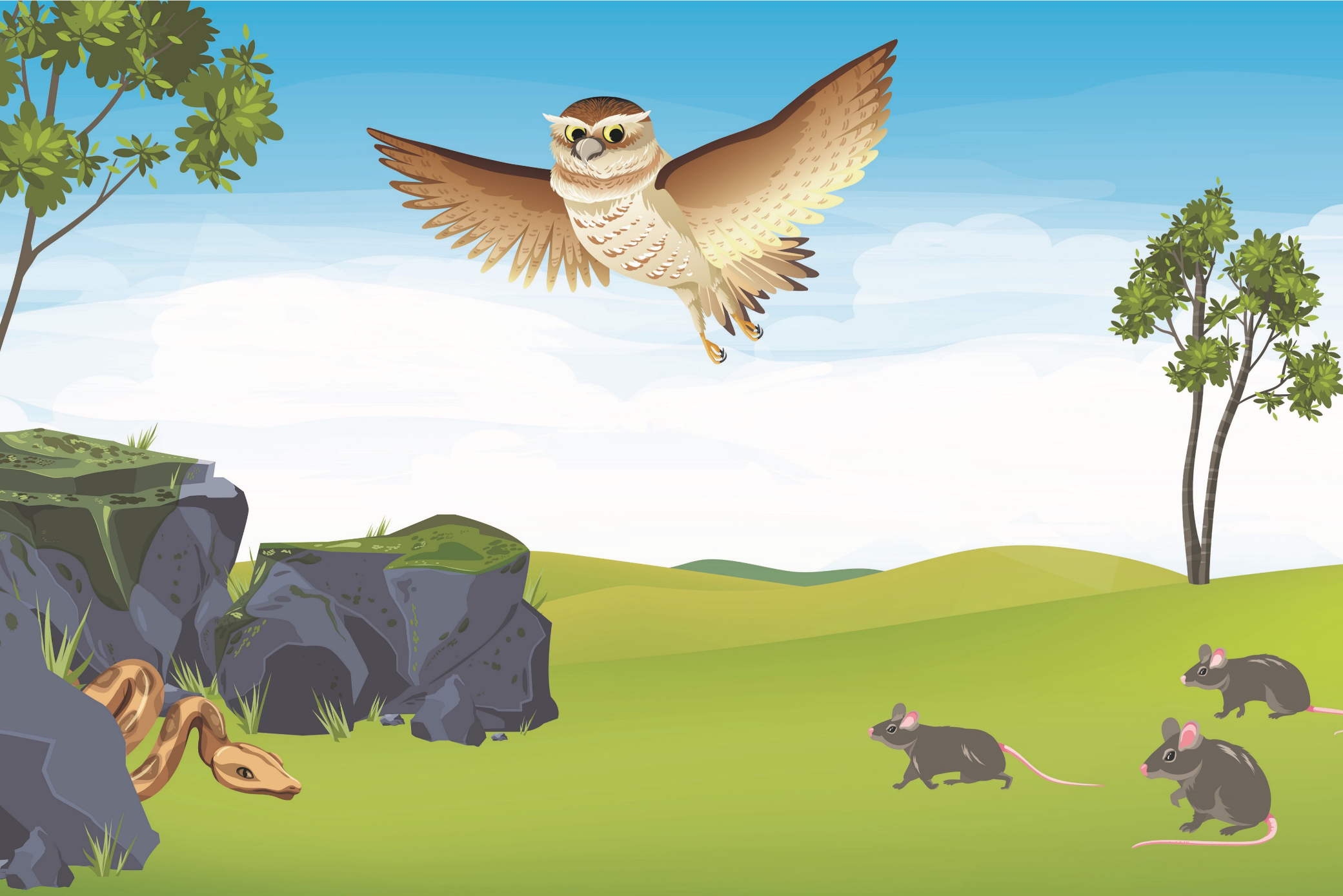
Issue 350: Evolution-informed therapies exploit evolutionary consequences of drug resistance to inhibit treatment-resistance and prolong time to progression. One strategy, termed an evolutionary double-bind, uses an initial therapy to elicit a specific adaptive response by cancer cells, which is then selectively targeted by a follow-on therapy. This was inspired by predator facilitation seen with owls and snakes and illustrated here. Dessert rodents adapt to predation from owls by hiding. This in turn increases the hunting efficiency of dessert snakes that reside in the brush. Although the concept of an evolutionary double-bind has long been hypothesized in cancer, it has not been measured. In this paper, we present the first example of a quantifiable double-bind: radiation therapy with NK cells. RT induces lethal double-strand DNA breaks, but cancer cells adapt. While this increases resistance to DNA damaging agents, it also enhances expression of NK cell ligands creating an obvious choice for a double-bind strategy.