
Click the image below to view the full size version of this
cover.
Created by: Heiko Enderling
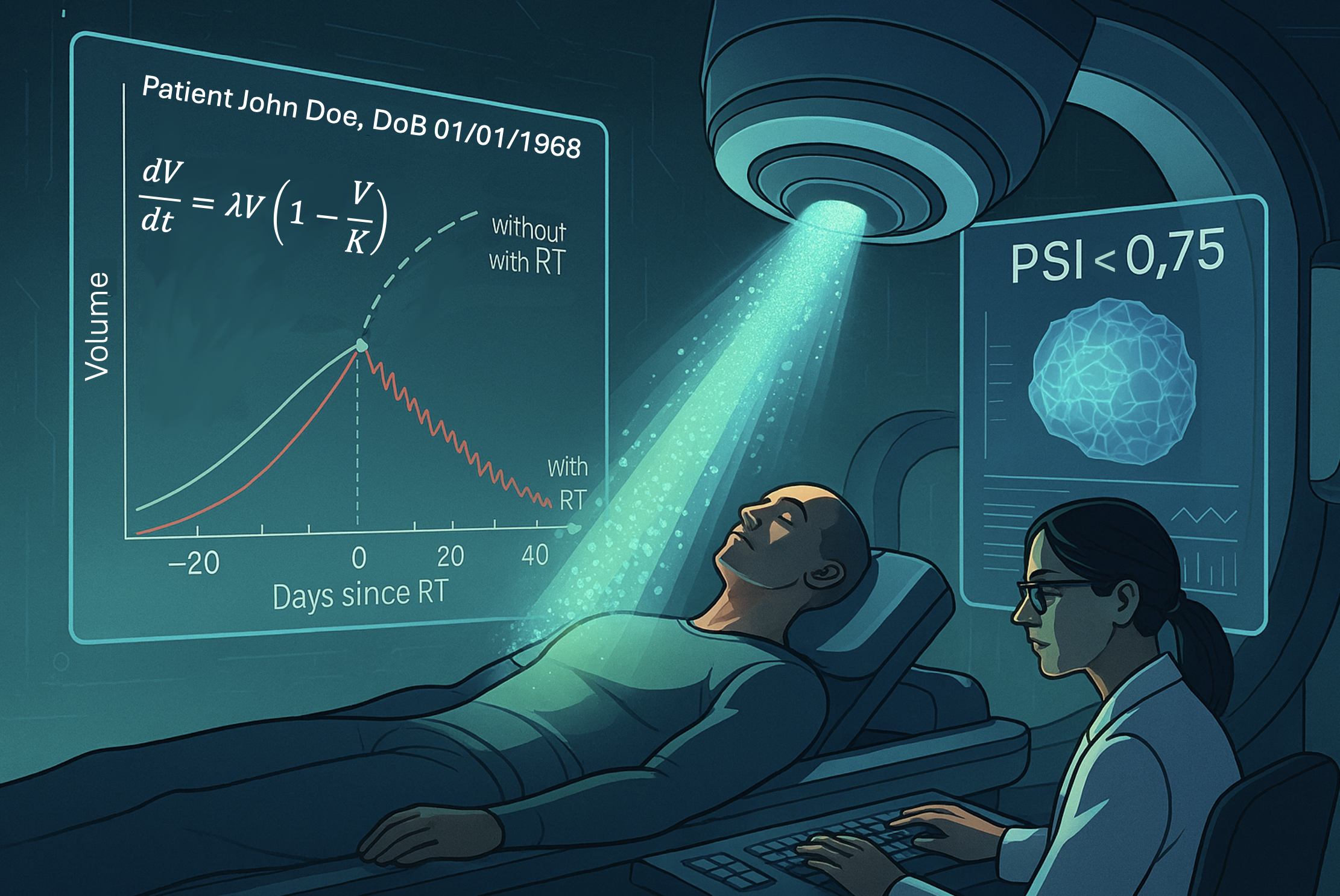
Issue 359: Our Phase II study tested a personalized approach to radiation therapy (RT) for oropharyngeal cancer in which the patient’s treatment plan was directly guided by a mathematical model. The proliferation saturation index (PSI) model derives the proliferatingand radiosensitive proportion of a tumor based on clinically observed net growth before therapy. Numerical simulations demonstrated that higher PSI may be better treated with smaller but more frequent radiation doses. Based on simulations, we hypothesizedthat personalization of fractionation using PSI would increase the percentage of patients achieving a rapid reduction in tumor size during RT. This clinical study validated our hypothesis, showing that personalized RT fractionation based on PSI achieves apromising rate of midtreatment response with favorable LF, PFS, and OS.