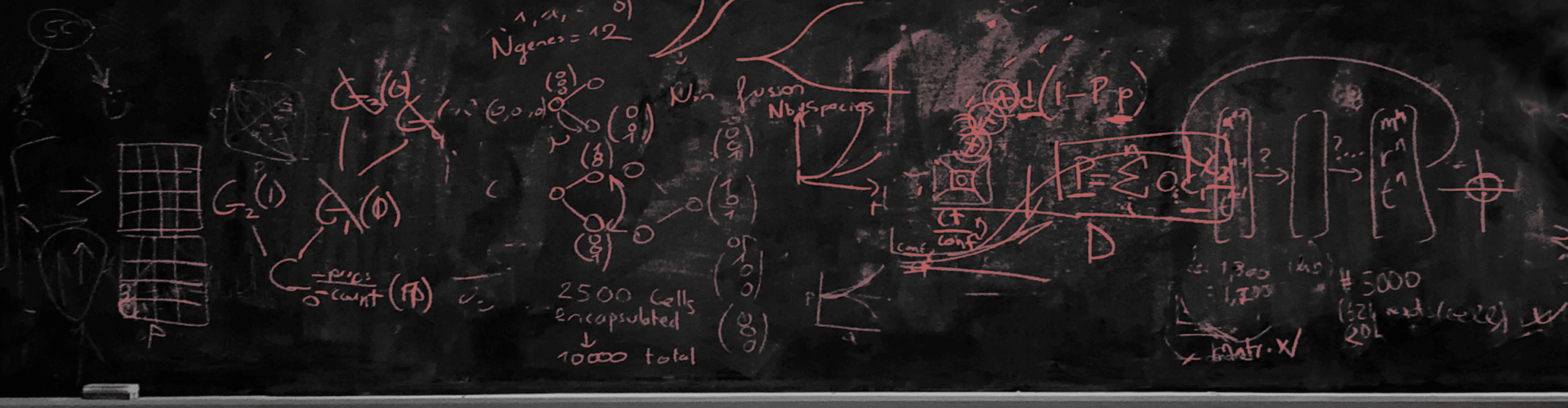
Click the image below to view the full size version of this
cover.
Created by: Behnam Rashidieh
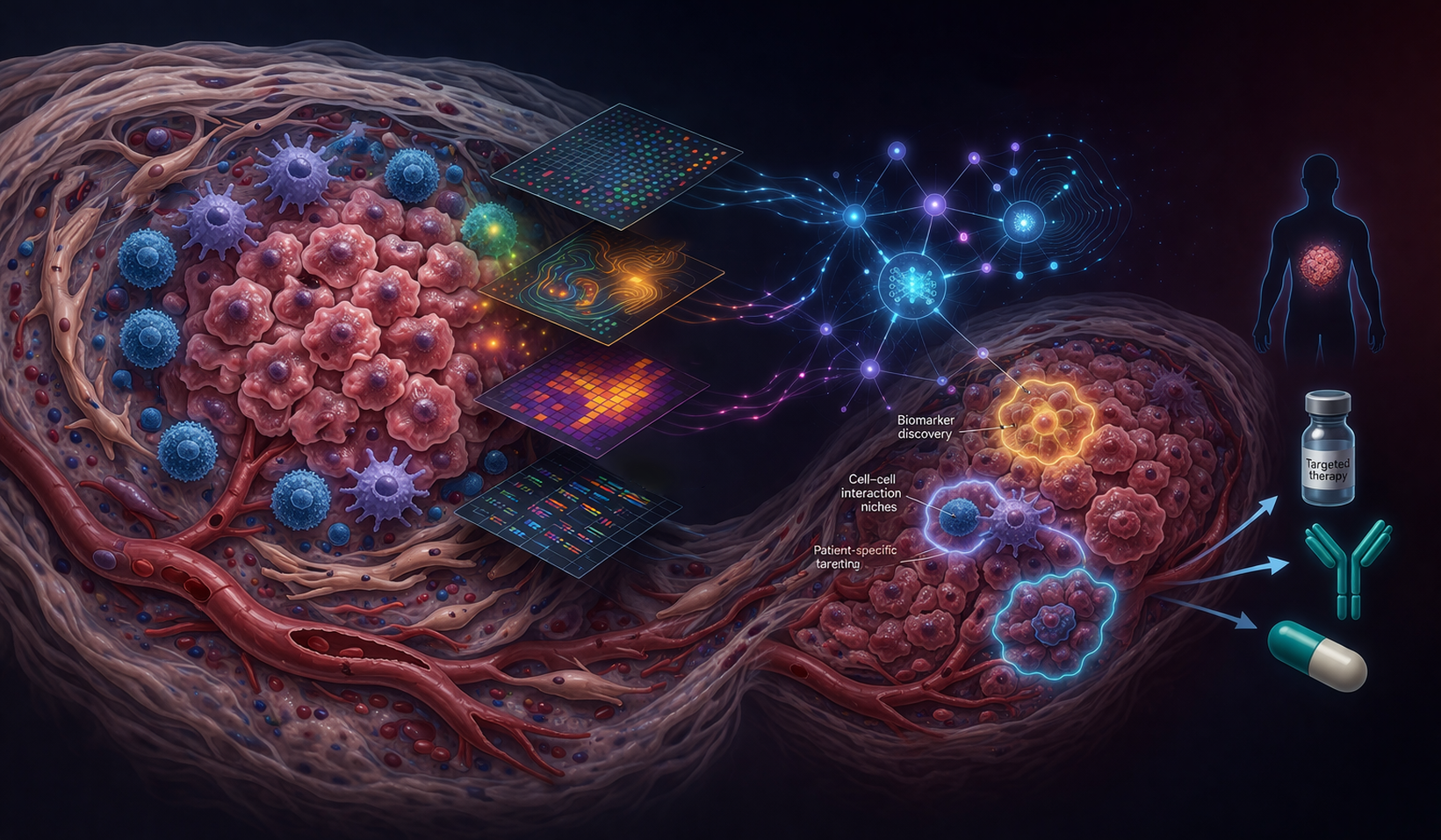
Issue 367: This artwork visualizes how integrative spatial omics and artificial intelligence can transform cancer research. On the left, a structured tumor microenvironment is shown with malignant cells, stromal elements, immune infiltrates, and vasculature, emphasizing that cancer is organized in space rather than as a uniform mass. Overlaid transcriptomic, proteomic, and molecular maps represent spatial omics technologies that capture this architecture. These signals flow into an AI-driven analytical network, symbolizing graph-based learning, multimodal integration, and predictive modeling. On the right, the inferred spatial patterns return to the tissue asclinically meaningful insights, including biomarker discovery, cell–cell interaction niches, and patient-specific therapeutic targeting. The image reflects the review’s conclusion that combining spatial omics with AI can refine tumor understanding and advance precision oncology. Animage generator and DALL·E were usedto create the artwork concept, followed by Photoshop for further editing and refinement.
© 2026 - The Mathematical Oncology Blog